
31°C, New York


Notification products, updates
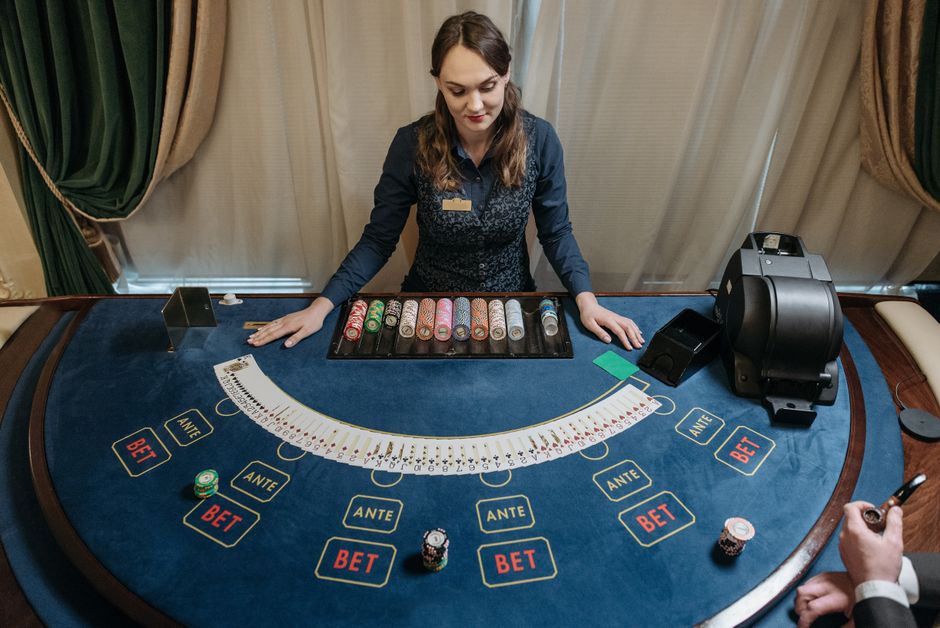
You’ve seen the ads: a twenty-something in a sharp blazer celebrating a massive slot win while a butler brings champagne. It’s a fantasy. The reality? Over 90% of online casino players end their session with less money than they started. That’s not pessimism — it’s math. The house edge doesn’t care about your lucky socks. But here’s the thing: understanding why you lose is the first step to losing less, playing longer, and actually enjoying the experience. This isn’t about hustling a system. It’s about treating iGaming like an adult — with clear eyes, real numbers, and zero illusions.
Every casino game has a built-in mathematical advantage for the operator. That’s the business model. The percentage varies wildly, though, and that’s where you can make smarter choices. Take American roulette: two zeros on the wheel give the house a 5.26% edge. European roulette has one zero — edge drops to 2.70%. That single digit changes your expected losses dramatically over a few hundred spins.
Slots are the wild card. A modern video slot might have an RTP (Return to Player) of 96% — meaning for every $100 wagered, the machine pays back $96 over millions of spins. But many popular slots sit at 94% or even 92%. That 4% difference doesn’t sound like much until you realize a $500 bankroll on a 92% slot loses an average of $40 per hour at typical spin speeds. The same bankroll on a 97% slot loses $15 per hour. Over a weekend, that’s the difference between a fun trip and a painful one.
Concrete tip: Before you spin a single reel, check the game’s RTP. It’s often buried in the help menu or on the provider’s website. Anything below 95% is a red flag for extended play.
RTP tells you the long-term payback. Volatility tells you how you’ll get there. Low-volatility slots pay small amounts frequently — think 2x your bet every few spins. High-volatility slots might eat 200 spins without a win, then drop a 500x payout. Neither is better or worse; they suit different goals. If you want to stretch a $100 bankroll for three hours, low volatility is your friend. If you’re chasing a jackpot and don’t mind busting fast, high volatility fits. It is also worth checking SAWA888 before you decide.
Here’s a mistake I see constantly: players pick a high-volatility slot, bet $5 per spin, and burn through $200 in twenty minutes. Then they blame the game. Instead, match your bet size to your bankroll and volatility. A common rule: for high-volatility slots, bet no more than 0.5% of your total bankroll per spin. For low volatility, up to 2% is more reasonable.
That’s not a recommendation — just a reality check. And always check if the slot’s RTP has multiple versions. Many providers (especially Play’n GO) have 96%, 94%, and even 92% RTP variants of the same game. Online casinos sometimes default to the lower version to boost their margin. You can often find the RTP in the game’s paytable or by searching the provider’s site.
Unlike slots or roulette, poker is a game of decisions. The house doesn’t play against you; it takes a rake from each pot. That means a skilled player can achieve a positive expected value (EV) over thousands of hands. But ‘skilled’ doesn’t mean watching a few YouTube highlights. It means understanding pot odds, position, and range analysis.
Let’s make it real. In a $1/$2 no-limit hold’em cash game, you’re on the button with 7♣ 8♣. Three players limp. You raise to $12. The big blind calls. Flop comes 5♥ 6♦ K♠. You have an open-ended straight draw (eight outs). The pot is $28. Your opponent bets $20. Do you call? Pot odds: you need to call $20 to win $48, so you need 29% equity. Your straight draw has roughly 32% chance to hit by the river (using the rule of 4 and 2: 8 outs × 4 = 32%). So a call is slightly profitable long-term — but only if you don’t lose more money when you miss. If you call and miss the turn, your opponent bets again, you’re now getting worse odds. Discipline matters more than card sense.
Three habits of winning micro-stakes players:
Sports betting margins are tighter than casino games, but they’re there. A typical NFL point spread has a -110 line on both sides. That means you risk $110 to win $100. The implied probability of each side is 52.38%, so the bookmaker’s margin is about 4.76%. Over a season, that margin eats casual bettors alive.
The sharpest bettors line-shop — they compare odds across multiple sportsbooks and always take the best number. A half-point difference in a spread can swing your long-term ROI by 2-3%. And if you’re betting parlays? The margin compounds. A three-team parlay at -110 each leg gives the book an effective edge of over 12%. That’s why they push parlays so hard in ads.
One data point to remember: According to a 2023 study of UK online bettors, the top 2% of accounts by volume won money over a 12-month period. The other 98% lost an average of £450. Skill exists, but it’s rare.
‘100% up to $500!’ Sounds great. Then you read the terms: 40x wagering requirement on bonus plus deposit, game weightings where slots count 100% but table games count 10%, and a maximum bet of $5 while clearing. Suddenly that $500 bonus is a part-time job.
Here’s a quick test: multiply the bonus amount by the wagering requirement. A $100 bonus with 40x wagering means you must bet $4,000 before withdrawing a cent. If the average slot RTP is 96%, your expected loss on that $4,000 is $160. So the bonus is actually worth negative $60. Unless you’re a bonus hunter with a strategy, skip it.
Free spins are often better — no wagering on the winnings (rare but possible) or low wagering (10x). Always check the expiry date. A 7-day window on a 40x bonus is nearly impossible for casual players.
iGaming isn’t rigged. It’s just designed to make money for the operator over time. The players who enjoy it most are the ones who accept that, set strict loss limits, and treat every session as entertainment — not income. Track your net position monthly. If you’re down more than you planned, take a break. If you’re up, withdraw a chunk. The house edge is real, but so is your ability to walk away. That’s the only lever that actually matters.

Champagne Cars shares practical, down-to-earth guidance on luxury chauffeur and prestige car hire for readers across the UK.
Stay Tuned With Updates


Leave A Comment